Our Blog
February 3, 2026
What Is Haylage? Plus 7 Myths Busted by Our Nutritionist
In a 2023 survey of UK horse owners, 67% fed hay as the only forage source. When asked for the reason for not feeding haylage, 66% of respondents said that they weren’t sure how to feed it. It’s clear that there is a widespread lack of knowledge about what haylage is and how exactly to feed it - many owners simply don’t feel confident in feeding haylage to their horse.
The reality is that haylage is not inherently more difficult to feed than hay. Haylage is a high-quality, conserved forage produced from wilted grass that undergoes controlled, limited fermentation to achieve stability and can be suitable for a wide range of horses. It’s higher in moisture than hay with a lower dry matter content, meaning you often need to feed a higher weight of haylage to provide your horse with the same nutrients.
If you’re not sure if haylage is the right type of forage for your horse, you can get in contact with our team for tailored advice and recommendations.
In this blog, Briony will explain what haylage is and bust 7 of the most common myths about haylage, so you can make the right choice for your horse.
What is Haylage?
Haylage is a type of forage made from grass or legumes. It’s harvested and wrapped at a higher moisture content than traditional hay, typically between 30–50% moisture. Unlike hay, which is left to dry in the field or barn-dried, haylage is produced in airtight conditions, where controlled, limited fermentation preserves nutrients, while the higher moisture content reduces dust.
Haylage typically has a softer texture and higher digestibility than hay due to earlier cutting and higher moisture content; these characteristics can make it a popular choice for fussy eaters, horses with respiratory conditions, or older horses with dental issues. Although haylage can vary in energy, protein and sugar content, it’s typically higher in digestible energy and protein than hay, making it suitable for horses in regular work or performance horses.
Briony recommends:
“When produced well, haylage can be a highly effective forage for horses. Careful control of cutting date, wilting, moisture content and airtight storage allows a consistent, palatable and hygienic forage to be produced, which can suit a wide range of horses when fed appropriately. As with any forage, understanding its nutritional profile and feeding it on a dry matter basis is key to getting the best results.”
Learn more about the differences between hay and haylage in our blog, ‘Hay vs Haylage: Which Is The Right Option For Your Horse?’.
Haylage Myths: Busted
There are many myths and misconceptions about haylage that can put horse owners off from feeding it to their horse. Some stem from outdated information, others from confusion around moisture levels, sugar content or how much to feed.
Below, Briony looks at 7 of the most common haylage myths and the truth behind them.
Myth 1: "Laminitic Horses Can’t be Fed Haylage"
False.
Horses that have a history of laminitis, or those considered at risk, require a forage that is ideally less than 10% water-soluble carbohydrates (WSC) sugars on a dry matter basis. Many horse owners believe that haylage is inherently “richer” than hay and therefore higher in WSC sugars, making it unsuitable for lamintics. In fact, 90% of horse owners surveyed who didn’t feed haylage stated that it was unsuitable for those prone to laminitis, reflecting perception rather than measured nutritional composition.
In reality, sugar accumulation in grass is primarily influenced by environmental conditions during growth and harvest — including sunlight, temperature and rainfall — meaning that both hay and haylage can vary widely in their water-soluble carbohydrate content. Either forage type may fall below recommended thresholds when produced and selected appropriately, and suitability should be assessed on the basis of forage analysis rather than forage type alone.
That said, there are valid reasons why haylage may be less appropriate for some laminitic horses. Haylage is often more palatable and, due to its higher moisture content and softer texture, may be consumed more rapidly than hay. In horses on restricted rations, this can reduce overall chew time, increase the opportunity for faster intake and potentially contribute to higher post-prandial glucose and insulin responses. In addition, some haylages — particularly those produced from earlier-cut or more digestible grasses — may provide higher levels of digestible energy than is desirable for horses requiring strict weight and metabolic control.
For these reasons, haylage cannot be considered universally suitable or unsuitable for laminitic horses. Careful selection, appropriate feeding rates, and consideration of intake behaviour and overall ration structure are essential to minimise risk.
At M&T, we analyse our hay and haylage regularly and have selected our most suitable forage for those requiring a low sugar diet from a product that is consistently analysed below the 10% threshold. Please contact our nutritionist to find out about the most suitable forage options for those requiring a low sugar diet.
Myth 2: "Haylage Doesn’t Fulfil All My Horse’s Nutritional Requirements"
False - with an important caveat.
The nutritional contribution of hay and haylage is often underestimated. Forage should form the foundation of every horse’s diet, and selecting a high-quality and appropriate forage source can help reduce reliance on concentrate feed and, in some cases, simplify overall feeding management.
For the performance horse or poorer doer, high-quality forage can satisfy a greater proportion of their energy and protein requirements, meaning that the concentrate feed can often be reduced. This is great news for those looking to reduce the overall starch and sugar content of their horse’s diet, as less concentrate feed often results in significantly less starch.
For good doers, selecting an appropriate forage may allow a less restricted forage ration while still supporting weight and metabolic management, and in some cases may reduce the need for additional strategies such as soaking hay to lower sugar content.
Overall, selecting an appropriate forage can help save both time and money, with the added benefit of supporting a happier, healthier horse. While high-quality hay or haylage can meet many energy and protein requirements, it cannot reliably provide the correct balance of vitamins and minerals, meaning that even where concentrate feeds are reduced, a balancer or vitamin and mineral supplement is still recommended.
Briony advises:
“High-quality forage should do most of the nutritional heavy lifting in a horse’s diet. When hay or haylage is chosen carefully, concentrate feeds can often be reduced, but a balancer remains essential to ensure vitamin and mineral needs are met.”
Myth 3: "You Need To Feed Less Haylage Than Hay"
False.
It is a common misconception that horses should be fed less haylage than hay. In a recent survey, 33% of horse owners who didn’t feed haylage said that it was too high in energy and leads to weight gain, reinforcing the perception that haylage is inherently “richer” than hay (i.e. it contains more energy) and therefore should be fed in smaller amounts
While some haylages may be more digestible than hay on a dry-matter basis — largely due to earlier cutting rather than the conservation method itself — haylage also contains substantially more water than hay. This higher moisture content effectively dilutes nutrients when considered on a fresh-weight basis.
For example, if you fed 5 kg of hay vs 5 kg of haylage of the same type and quality:
- Hay (10% moisture)
- 0.5 kg water
- 4.5 kg nutrients (dry matter)
- Haylage (50% moisture)
- 2.5 kg water
- 2.5 kg nutrients (dry matter)
So, despite the haylage being “richer” in some cases on a dry-matter basis, you are physically delivering fewer nutrients per kilo on a fresh-weight basis simply because you’re also delivering more water.
A simple way to visualise this:
You make two glasses of fruit squash using the same amount of squash.
- One glass you fill halfway with water - this represents hay (low moisture)
- The other glass you fill right to the top - this represents haylage (high moisture)
To consume the same nutrients (same amount of squash), you will need to consume more water (overall volume) of the ’haylage’ (a full glass vs a half glass) to consume the same nutrients.
Therefore, when feeding haylage, it is important to remember that feeding rates are likely to be greater than hay (how much greater will depend on the dry matter/moisture content). For many haylage, horses require 20–50% more by weight compared with hay to achieve the same dry-matter intake. On the packaging of M&T haylage products, minimum feeding rates based on moisture content are stated to help ensure requirements for nutrients (most crucially, fibre) are met.
Myth 4: "Feeding Haylage Will Give My Horse Swollen Legs”
False.
Haylage being the sole cause of swelling in the lower limbs (when unrelated to exercise/trauma) is uncommon. While nutritional factors can influence fluid balance and inflammatory responses in the body, it is rare for nutrition to be the primary cause of limb swelling, and rarer still for haylage itself to be directly responsible.
When introduced correctly (a gradual introduction over 2-3 weeks when changing between very different forage types), problems such as limb swelling are highly unusual.
Where limb swelling is observed, nutritional considerations are best assessed in the context of the whole ration and management system, rather than focusing on forage alone.
Briony recommends:
“There are many potential causes of filled legs, including injury, illness, trauma or underlying clinical conditions, and these should always be considered first, ideally in consultation with your vet.
From a nutrition and management perspective, I’d then look at any recent changes in daily movement, turnout, routine, or feed and forage management, as reduced activity is a far more common contributor. Feeding strategies can often be adjusted to help encourage more natural movement and support healthier day-to-day routines.”
Myth 5: “Haylage Makes All Horses Fizzy”
False.
Many horse owners avoid feeding haylage, believing that it will make their horse “fizzy” or “sharp”. Survey data indicates that 15.3% of horse owners who didn’t feed haylage said their horses became too excitable on haylage, while 26.5% thought it was too high in energy.
This perception often arises from confusion between digestible energy and sugar content. Haylage is not inherently higher in sugar content than hay, and in some cases may be comparable or lower, depending on how and when the forage is produced. Switching to haylage does not automatically increase dietary sugar intake.
That said, early-cut haylage is often higher in digestible energy — and sometimes protein — than later-cut, more mature hay. For horses in light work, good doers, or naturally sharp individuals, this additional energy intake may manifest as increased forwardness or behavioural energy, which can be perceived as “fizziness”.
However, early-cut haylage does tend to be higher in energy and protein than later-cut hay. For a naturally sharp horse or one in light work, this additional energy might show up as extra behavioural energy, which could be perceived as “fizziness”.
Ultimately, it’s the total energy intake relative to workload and requirement that matters most, rather than forage type. Briony advises:
“When a horse appears sharper or more excitable, it’s rarely due to one factor in isolation.
Behaviour is influenced by a combination of recent feed and management changes, exercise and turnout, routine, comfort, and environmental or social factors such as group dynamics. Where practicable, making single changes at a time — whether to feed, management or exercise — can help identify what is influencing behaviour, but keeping sight of the bigger picture is key.”
As with any dietary change, switching from hay to haylage too quickly may cause temporary digestive discomfort in some horses, which — like other forms of discomfort — can be reflected in changes in behaviour. Introducing forage gradually over a period of around two to three weeks helps support digestive adaptation and minimise these effects.
Myth 6: “Haylage is Too Rich for Most Horses”
False.
The idea that haylage is “too rich” is a common, but overly simplistic, generalisation. Some haylage (especially first-cut haylage, such as our Haylage Elite) can be higher in digestible energy and protein than the majority of hay, but whether it’s “too rich” will depend on the individual horse, their workload and their metabolism.
Performance horses or growing youngstock may benefit from the additional energy provided by first-cut haylage. However, leisure horses or easy keepers may require smaller portions, a mixture of hay and haylage, or a later-cut haylage (such as our Low-Energy Haylage) to avoid unwanted weight gain.
Importantly, the nutrient density of haylage can vary widely depending on grass species, growing conditions and stage of maturity at harvest. Early-cut haylage is typically more digestible and energy dense, while later-cut haylage is generally lower in energy and often more comparable to moderate-energy meadow hay. As with any forage, analysis and appropriate feeding rates are key to determining suitability.
Briony recommends:
“Rather than asking whether a forage is ‘too rich’, it’s more useful to ask whether it’s appropriate for that horse. Matching forage type and feeding rate to workload, body condition and overall management is far more effective than avoiding any one forage type altogether.”
Myth 7: “Haylage Should Replace All Hay”
False.
Some types of haylage can be more nutrient-dense than hay, which may be beneficial for certain horses. However, it doesn’t mean it should completely replace hay for every horse. Haylage is not intrinsically better than hay - they are simply two different forage options.
The decision whether to feed your horse hay, haylage or a combination of the two should depend on your individual horse’s needs. You should consider a wide range of factors, such as:
- Age
- Condition
- Forage intake
- Level of work
- Storage options
- Weight
- Clinical considerations/issues
Briony advises:
“Both hay and haylage can be appropriate depending on the horse. Haylage may suit horses needing more energy or improved palatability, while hay can work well where tighter control of intake is required. The key is selecting the forage — or combination of forages — that best fits the individual horse.”
High-Quality Haylage from M&T Haylage
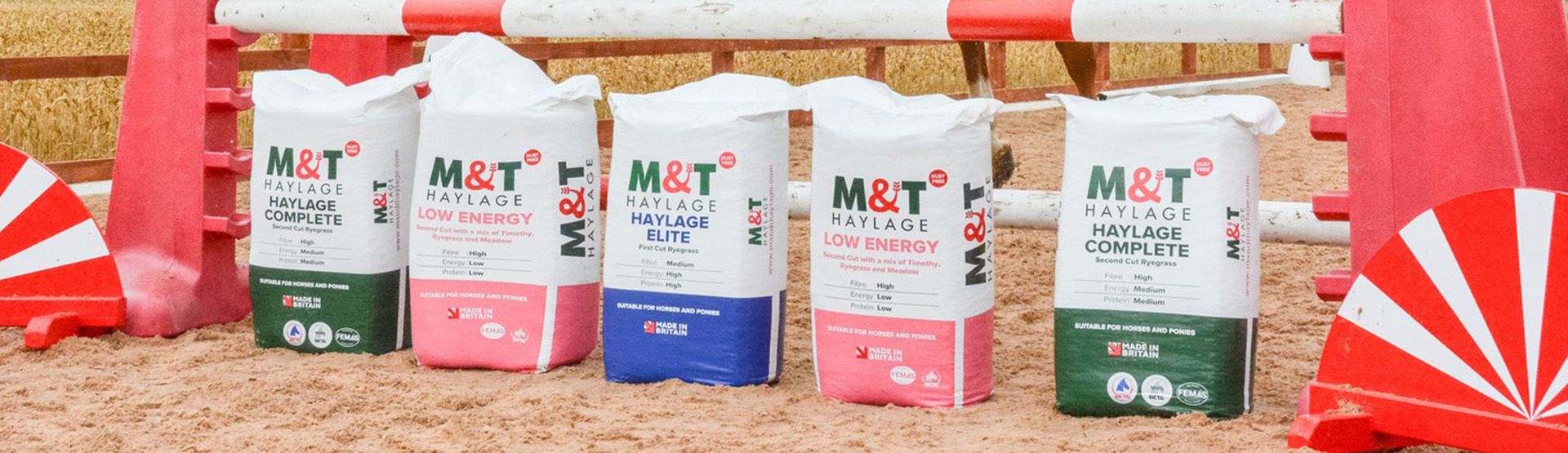
At M&T, we offer a range of premium haylage options. All our haylage is homegrown, and our forage is regularly analysed to ensure that we can offer you the best advice on the right forage option for your horse.
Each of our haylage products is designed to suit different nutritional needs:
- Haylage Complete - with medium protein and energy levels, this haylage is ideal for horses in light to moderate work, or those maintaining weight steadily. It’s also suitable for poor doers in lower levels of work, or breeding stock with higher nutritional requirements.
- Haylage Low Energy - with low sugar, starch, and energy levels, this haylage is suitable for better doers or those in rest or light work.
- Haylage Elite - with higher protein and energy levels, this haylage is best for performance horses or those in heavy work. It’s also suitable for those struggling to hold weight or poor doers.
Get in touch if you would like some expert nutrition from our nutritionist on feeding haylage to your horse, or would like to know more about our range of high-quality forage.
February 3, 2026
What Is Haylage? Plus 7 Myths Busted by Our Nutritionist
October 28, 2025
Feeding the Veteran Horse: 7 Golden Rules for Their Golden Years

October 20, 2025
What Type of Hay Is Best for Horses and Ponies?
October 5, 2025
What To Feed A Horse With EMS
July 16, 2025
Do Horses Need Hay in the Summer?

May 22, 2025
Changing Your Horses Diet From Winter to Spring
April 4, 2024
Eat, Sleep, Compete, Repeat

March 8, 2024
Consistency Is Key for Horses
March 8, 2024
Top Tips For Managing Forage On The Go: Part Two
February 19, 2024
Don’t Underestimate The Value of Preparation
February 6, 2024
Know Your Horse Inside Out
December 11, 2023
How To Get The Most Out Of Your Horse Forage During Winter
September 14, 2023
Hay Exportation – Why Choose British Hay?
March 3, 2023
Hay vs Haylage: Which Is The Right Option For Your Horse?
January 13, 2023
How To Bring A Horse Back Into Work After A Break
November 23, 2022
How To Body Condition Score Your Horse
November 7, 2022
Winter Feeding Tips For Horse Owners
October 20, 2022
Money Saving Tips For Horse Owners
October 3, 2022
8 Ways To Keep Your Horse Entertained

September 30, 2022
Equestrian Question and Answer Session: Sophie Platt
August 25, 2022
Preparing Your Horse For Competition
July 28, 2022
What Is Normal For My Horse?
June 30, 2022
Compeition Horses: Managing Forage and Water Intake
September 22, 2021
Feeding The Equine Athlete
September 7, 2021
How To Feed Your Horse Indoors This Winter
December 7, 2020
Premium Horse Forage: Ask The Nutritionist
July 9, 2020
Top Tips For Managing Forage For Horses On The Go: Part One