Ryegrass Hay
Explore Our High-Quality Ryegrass Hay For Horses and Ponies
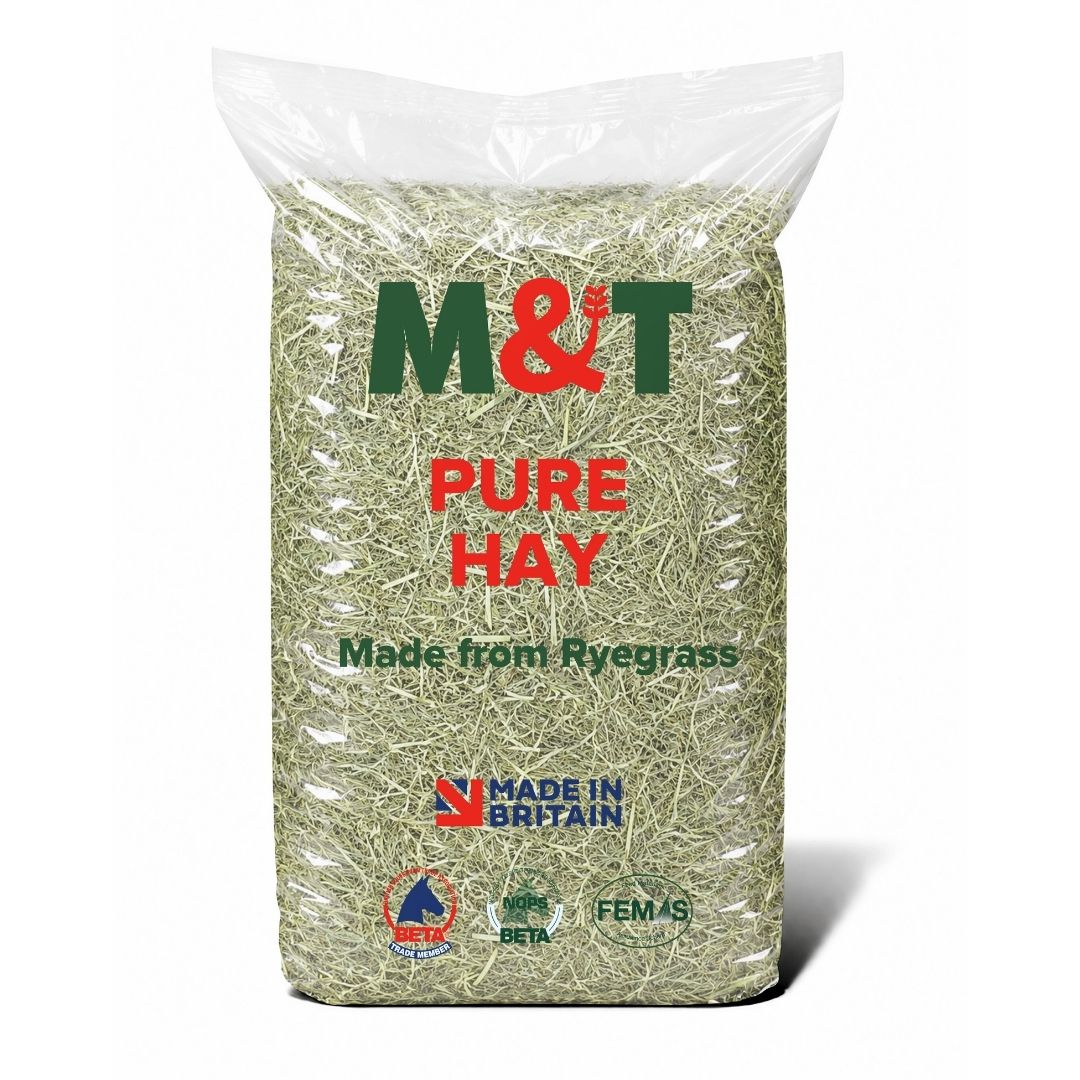
At M&T Haylage, our high-quality Ryegrass Hay offers lower protein and energy levels than haylage, whilst still providing essential vitamins and minerals for a healthy horse. It is a palatable forage choice for horses and ponies, suitable for rest through to moderate levels of work. Delivering a balanced blend of fibre, energy and protein, this hay offers a range of digestive health benefits which help to maintain condition and reduce reliance on hard feeds.
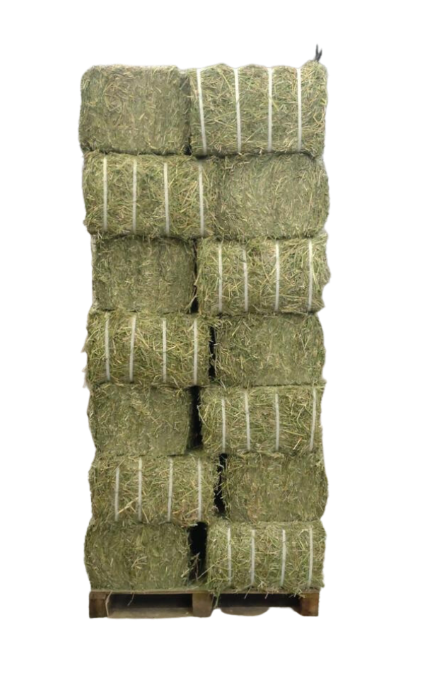
Browse through our selection of Ryegrass Hay below to find the perfect option for your horse’s health and performance. Available as bagged (12.5kg) or double-compressed (approx. 20kg) strapped hay bales.
-
Fibre
high
Energy
medium
Protein
medium
Crude Protein (%)
6-9
Digestible Energy (MJ/Kg)
9-11
Crude Fibre (%)
22-26

-
Fibre
high
Energy
medium
Protein
medium
Crude Protein (%)
6-9
Digestible Energy (MJ/Kg)
9-11
Crude Fibre (%)
22-26
Ryegrass Hay FAQs
Can Horses Eat Ryegrass Hay?
+Yes, horses and ponies can eat ryegrass hay. Ryegrass hay typically contains higher levels of energy, protein and sugar than meadow and timothy hay, making it more suitable for horses with higher nutritional demands, such as those in high levels of work, rather than sedentary horses or those prone to metabolic conditions.
For consistent quality forage, choose premium dust-extracted ryegrass hay from M&T Haylage. Enquire online today.
Is Ryegrass Hay Good for Horses and Ponies?
+Yes, ryegrass hay can be a good forage option for some horses and ponies. It’s naturally higher in protein and energy (calories) than meadow hay, making it a particularly suitable choice for horses and ponies with higher nutritional needs, including:
- Horses and ponies in moderate to high levels of work
- Poor doers that require additional calories to maintain condition
- Performance horses needing sustained energy for competitions
- Breeding stock, including pregnant or lactating mares
It typically should not be fed to good-doers, overweight horses or ponies, or those prone to metabolic disorders such as EMS, or laminitis due to its moderate sugar content.
If you’re unsure if ryegrass hay is right for your horse, please reach out to our equine nutritionist, Briony, who will be happy to advise you on the most appropriate forage choice to meet your horse’s needs.
Should I Choose Ryegrass or Meadow Hay for My Horse?
+Meadow hay offers a healthy balance of energy, protein and fibre, and is suitable for a wide range of horses and ponies in light to medium work. Ryegrass hay offers higher levels of energy and protein, making it more suitable for performance horses, those in moderate to high levels of work, those that have higher nutritional needs or those that are struggling to gain weight.
Read our blog, ‘What Type of Hay Is Best for Horses and Ponies?’, for a complete breakdown of the different forage options.
Is Ryegrass Hay Suitable for Laminitic Horses?
+No, ryegrass hay is not typically recommended for laminitic horses due to its high Non-Structural Carbohydrate (NSC) content. It’s a higher-energy forage, making it unsuitable for horses and ponies requiring a low-calorie, low-energy diet.
Please speak to our nutritionist, who can advise you on the most suitable forage for horses prone to laminitis, based on the latest nutritional analysis of our forage options.
Is Ryegrass Hay High in Sugar?
+Yes, ryegrass hay is generally considered high in sugar, and is typically higher in sugar than other hay options, such as meadow and timothy hay. It’s often best suited for horses and ponies with higher nutritional needs, whether that’s competition horses or those struggling to gain weight.
While inherently higher in sugar, the sugar content of ryegrass can vary considerably depending on a range of different factors, so forage analysis is always recommended. Speak to our team for the latest analysis of our ryegrass hay.
What are the Pros and Cons of Ryegrass Hay for Horses?
+Ryegrass hay is highly palatable and nutrient-dense, making it an excellent choice for horses that require additional energy or in moderate to high levels of work.
Pros:
- Naturally higher energy and protein content
- Highly palatable and generally soft in texture
- Supports weight maintenance and performance condition
Cons:
- Can be higher in natural sugars compared to meadow and timothy hay
- May not be suitable for laminitis-prone horses or those wanting to control their weight.
Like all forage options, suitability will depend on the individual horse and their unique requirements.
How Much Ryegrass Hay Should I Feed My Horse?
+The amount of ryegrass hay to feed depends on the horse’s body weight, workload and overall diet.
As a general guide, horses should consume at least 1.5% of their body weight in forage per day on a dry matter basis, though this may vary depending on activity level and condition. For a 500 kg horse, this would be roughly 8.3kg of hay (assuming approximately 90% dry matter). For horses that need to gain weight, 2-2.5% of their bodyweight should be the aim.
Because ryegrass hay is more energy-dense, portion control is particularly important for horses that are prone to weight gain. For this reason, a lower-energy forage is often preferred for good doers, as it allows a larger forage ration to be fed without excessive calorie intake, helping to maintain chew time and support digestive health.
Should Ryegrass Hay Be Soaked Before Feeding?
+If the aim is to reduce dust for respiratory health, improve hygienic quality, or lower soluble sugar levels for horses prone to laminitis, obesity or metabolic issues, then soaking ryegrass hay may be beneficial.
Soaking hay in clean water can help reduce water-soluble carbohydrate (WSC) content and lower dust levels, although results are variable and depend on the forage and harvest conditions. Soaking times can range from around 1 to 12 hours, with shorter soak times (such as 20–30 minutes) often used where the primary aim is to reduce dust, while longer soak times may be used to reduce sugar content.
It’s important to be aware that soaking can also lead to the loss of minerals and create conditions for bacterial growth, so soaked hay should be fed promptly and handled carefully. Where the primary aim is to improve hygienic quality, high-temperature steaming is often considered preferable, as it can significantly reduce dust, mould and bacteria without the same level of nutrient loss.
At M&T Haylage, all our hay is dust-extracted to help maintain high forage quality, support horses’ respiratory health and reduce the need to soak our hay before feedin
Where Can I Buy Small Bales of Ryegrass Hay in the UK?
+At M&T Haylage, we offer our premium, dust-extracted ryegrass hay in convenient bagged (12.5kg) or double-compressed (approx. 20kg) strapped hay bales. Please get in touch with our team to place an order.