Timothy Hay
Explore Our High-Quality Timothy Hay For Horses and Ponies
Discover our premium range of Timothy Hay at M&T Haylage — a high-fibre, low-energy forage option designed to support horses and ponies in light to moderate work. Our Timothy Hay combines natural palatability with dependable British quality to help the digestive health and weight management of your horses. It is a nutritious hay that is ideal for leisure horses and those requiring a balanced, low-calorie diet. It’s also suitable for laminitic and EMSE-prone horses and ponies.
Browse our range of Timothy Hay below to find the ideal forage for your horses. Available as bagged (12.5kg) or double-compressed (approx. 20kg) strapped hay bales.
-
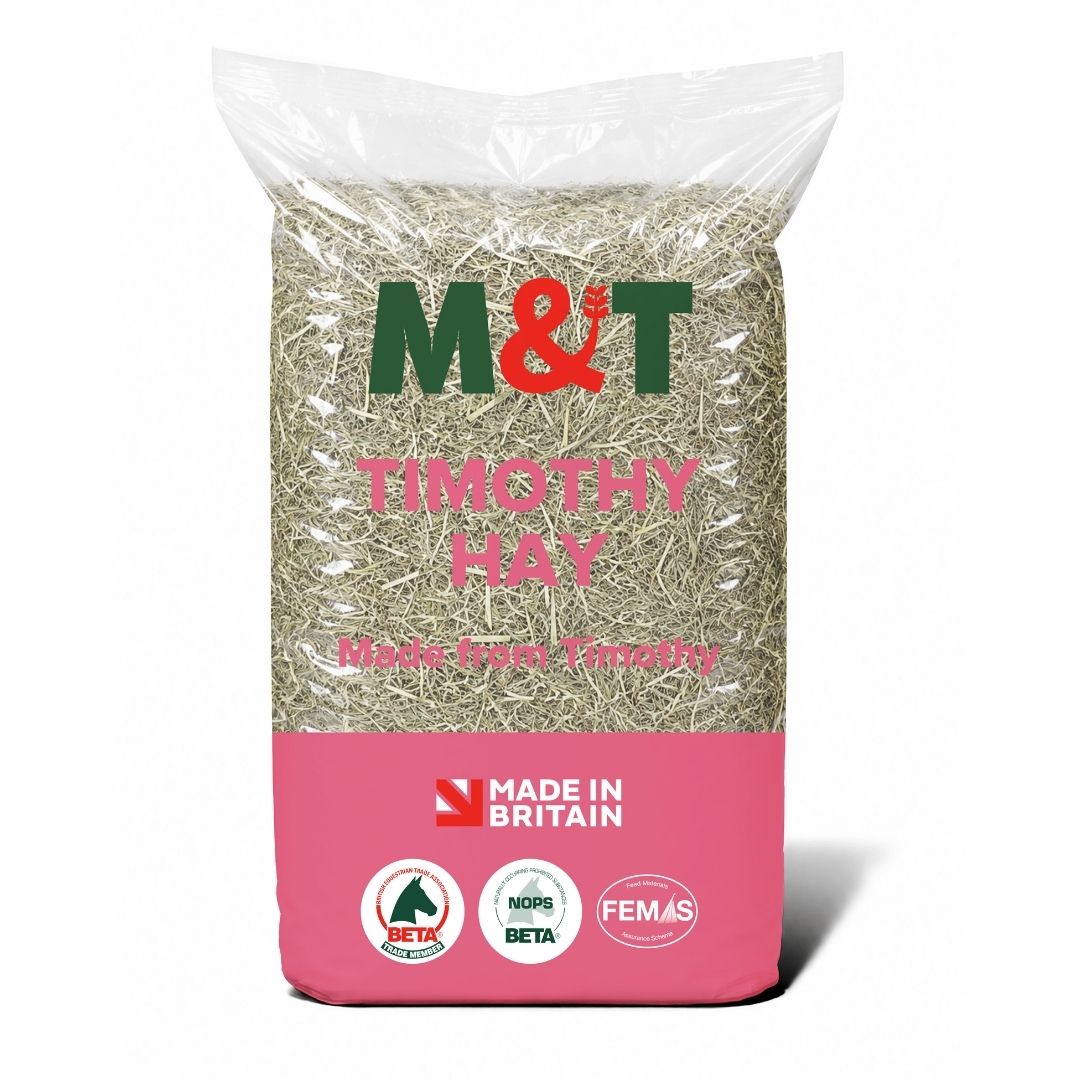
Fibre
high
Energy
low
Protein
medium
Crude Protein (%)
6-10
Digestible Energy (MJ/Kg)
5-8
Crude Fibre (%)
28-32

-
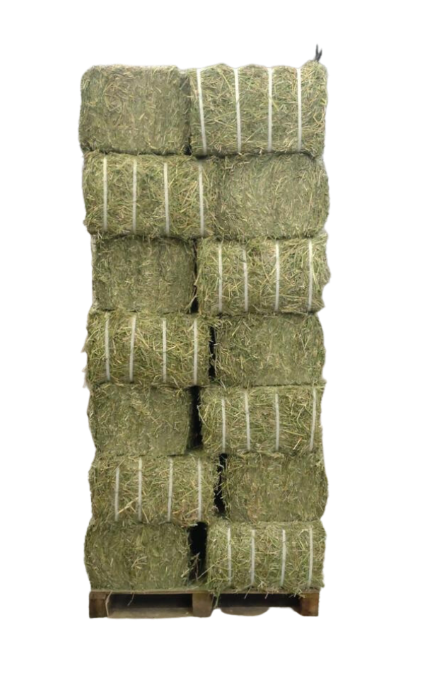
Fibre
high
Energy
low
Protein
medium
Crude Protein (%)
6-10
Digestible Energy (MJ/Kg)
5-8
Crude Fibre (%)
28-32
Timothy Hay FAQs
What Is Timothy Hay for Horses and Ponies?
+Timothy hay is a high fibre forage made from Timothy grass, which is a popular choice for horses and ponies due to its moderate protein and energy levels, high digestibility and palatability. It’s typically lower in energy and calories than other forages, such as Ryegrass, making it a suitable forage option for horses that require a lower-energy diet, including those in weight management programmes or those in light work or box rest.
While Timothy hay is often recommended for horses requiring fewer calories, it’s important to remember that other factors can influence the hay’s nutritional profile, so always speak to a nutritionist if you’re unsure if Timothy hay is the right choice for your horse or pony.
Can Horses Eat Timothy Hay?
+Is Timothy Hay Good For Horses and Ponies?
+Yes, Timothy hay is a popular forage choice for horses and ponies. It’s high in fibre, highly palatable and offers moderate protein and energy levels, making it suitable for good doers and horses on weight management programmes. Timothy hay is also typically low in sugar and starch, making it suitable for horses prone to laminitis or metabolic conditions.
Please speak to the M&T Haylage team to request the latest analysis of our forage and our nutritionist’s current recommendations.
What Are The Benefits of Feeding Timothy Hay to Horses and Ponies?
+There are many benefits to feeding Timothy hay to your horse or pony, including:
- It’s highly palatable, with a natural aroma and texture that appeals to many horses, making it ideal for picky eaters
- It’s low in energy and moderate in protein, making it suitable for leisure horses, those in light work, those in box rest or those on weight management programmes.
- It’s typically lower in non-structural carbohydrates (NSC) and high in fibre, which can make it a suitable option for some horses prone to laminitis or metabolic conditions, depending on its analysed sugar and starch levels.
- Its high fibre content supports digestive health and helps manage overall energy intake.
Is Timothy Hay Good For Laminitic Horses/Ponies?
+Timothy hay can be a safe forage choice for horses and ponies prone to laminitis, due to its generally high fibre content and low non-structural carbohydrate (NSC) content. If you’re unsure what forage is best for your laminitic horse or pony, please reach out to our nutritionist, who will be happy to advise and provide the latest nutritional analysis for our Timothy hay.
Is Timothy Hay Low In Sugar?
+Timothy hay is generally considered to be low to moderate in sugar levels, and is often suitable for horses and ponies requiring low sugar diets, including those prone to laminitis and metabolic disorders. However, while it’s typically lower in sugar than other forages, such as Ryegrass, the sugar content of Timothy hay can vary based on growing conditions, cutting time and storage conditions.
If you’d like to request the latest analysis for our forage at M&T Haylage, please reach out to our team, and we’ll be happy to help.
What’s The Difference Between Timothy Hay and Meadow Hay for Horses?
+While both Timothy hay and meadow hay are popular forage choices for horses and ponies, there is a key difference between them – Timothy hay is a single-species forage, while meadow hay is a mixed-species grass cut from permanent pastures.
Here’s a summary of the key differences between Timothy and meadow hay:
- Composition – Timothy hay is a tall-stemmed coarse grass, while meadow hay is softer in texture with a mixture of various grasses, providing a more varied forage.
- Nutrition – Timothy hay offers low to moderate levels of sugar, energy and protein, making it ideal for good doers and horses in light work. Meadow hay can be highly variable, as the nutritional value will depend on the growing conditions, but it typically offers slightly higher nutrient levels, making it suitable for horses in light to moderate work.
- Palatability – Timothy hay has a coarser texture due to its high fibre content, making it better for chewing and digestibility, while meadow hay is often softer and is considered to be highly palatable.
Read our blog, ‘What Type of Hay Is Best for Horses and Ponies?’, for a complete breakdown of the different forage options.
What’s The Difference Between Alfalfa and Timothy Hay for Horses?
+Alfalfa is a high-protein legume hay, while Timothy hay is a high-fibre, single-species grass hay. Here’s a quick breakdown of the main differences between alfalfa (also called lucerne) and Timothy hay:
- Type: Alfalfa is a legume (from the bean family), while Timothy is a grass species.
- Nutrition: Alfalfa offers high protein and high levels of digestible energy, while Timothy is higher in fibre, but offers lower levels of energy and protein.
- Best for: Alfalfa is best for foals, broodmares, poor doers, and competition and performance horses. Timothy hay is best for horses in light work, on box rest, good doers, or horses prone to weight gain, laminitis and metabolic conditions.
- Feeding management: Because of its richness and composition, alfalfa is usually fed alongside other forages, while Timothy hay is suitable for use as a primary forage.
Where Can I Buy Compressed Timothy Hay Bales for Horses?
+At M&T Haylage, we offer our premium, dust-extracted meadow hay in convenient double-compressed (approx. 20kg) strapped hay bales, or as bagged (12.5kg) hay. Please get in touch with our team to place an order.